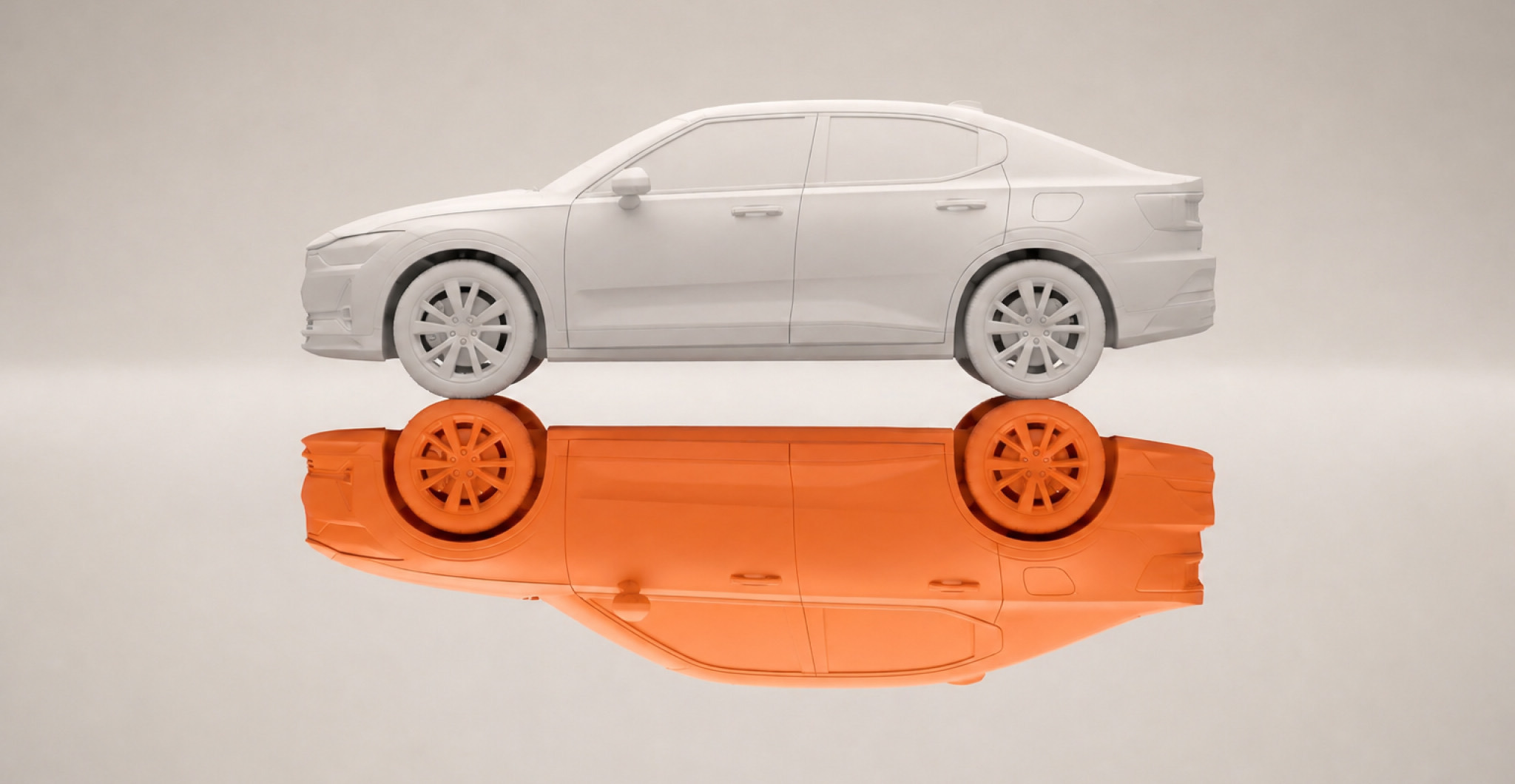
This guide explains what a digital product twin is, how it differs from a simulation-style digital twin, what it connects, and how it pays off across design, manufacturing, and the field.
What is a digital product twin?
A digital product twin represents the product as connected data: every requirement, function, component, and test, and the relationships between them. Unlike a document or a CAD file, it is queryable and always current, so a change in one place is visible everywhere it matters. That connected structure is what turns product data into operational decisions, the theme of product twin across the product lifecycle.
Product twin versus simulation digital twin
A simulation "digital twin" mirrors physical behavior, useful for predicting how a part flexes or a fluid flows. A digital product twin models the product's structure and relationships: what it is made of, what depends on what, and whether it meets its requirements. The two are complementary, but only the product twin answers engineering and configuration questions across the whole product. Confusing the two is why many "digital twin" projects never leave the lab.
What a digital product twin connects
The value comes from breadth. When requirements, software, hardware, and tests live in one connected model, you can trace any function end to end and see the impact of any change. That is what makes it possible to tame requirement chaos and variant complexity with digital product twins, and to give commercial vehicle R&D the architecture transparency it needs, as argued in the cost of complexity.
Digital product twins across the lifecycle
A product twin is not just a design-time artifact. It carries value from engineering into manufacturing and into the field. In production, it enables closed-loop feedback, explored in closed-loop manufacturing with digital twins. In operation, it turns product data into uptime and service decisions across the lifecycle.
Digital product twins in the real world
The pattern holds across industries. French National Railways uses connected twins and unified product data to redefine rail operations, described in how digital twins redefine rail operations. In defense, Rheinmetall Air Defence improved change impact analysis with a defense digital twin, covered in building a defense digital twin.
The foundation: a knowledge graph under the twin
Under a real digital product twin is a knowledge graph: a semantic model that connects every discipline into one navigable structure. It is the same foundation that makes complex programs work, which is why software-defined vehicles demand a domain-specific knowledge graph, and why the product twin sits at the heart of engineering software-defined vehicles. The SPREAD platform builds and governs this product twin, and you can explore a connected product model directly in Product Explorer.
FREE REPORTThe Engineering Intelligence Index 2025How engineering teams are coping with software-defined complexity, and where the leaders pull ahead. Survey data and benchmarks.Get the report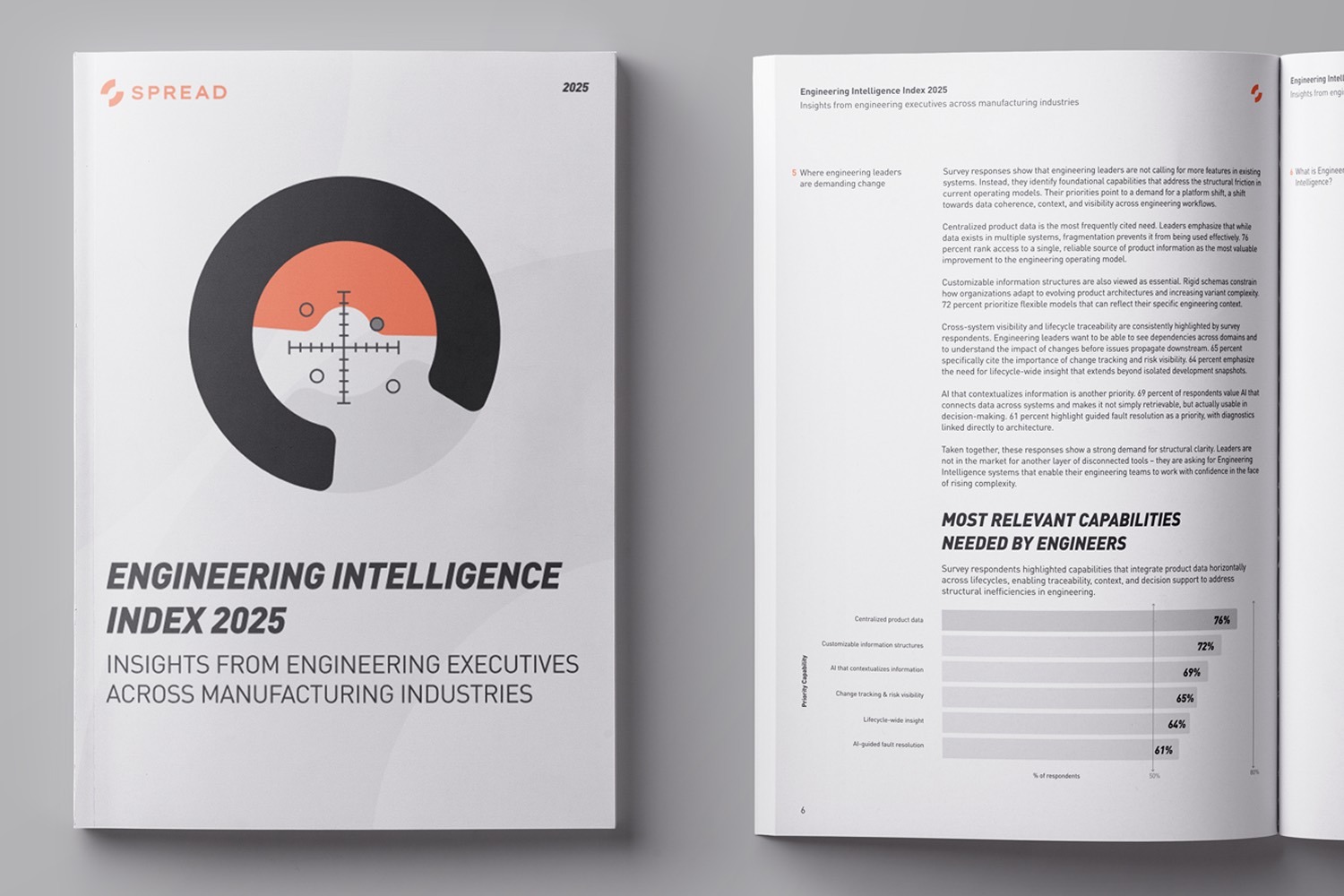
Frequently asked questions
What is a digital product twin?
A digital product twin is a connected, living model of a product that unifies its requirements, functions, software, hardware, and test data across the lifecycle. It lets people and AI agents query the real product and trace relationships across domains, instead of chasing data across disconnected tools.
How is a digital product twin different from a digital twin?
A simulation-style digital twin mirrors physical behavior, such as how a part flexes or a fluid flows. A digital product twin models the product's structure and relationships, what it is made of, what depends on what, and whether it meets its requirements. The product twin is what answers engineering and configuration questions across the whole product.
What does a digital product twin connect?
It connects requirements, functions, software, hardware, and test data into one navigable model, along with the relationships between them. That breadth is what enables end-to-end traceability, change-impact analysis, and variant management across the product.
How does a digital product twin help with variant complexity?
Because it models the product as connected data rather than static documents, a digital product twin lets teams manage millions of valid configurations without losing traceability. Engineers can see how a change ripples across variants and confirm each configuration still meets its requirements.
A digital product twin is not a nicer diagram. It is the difference between describing your product and being able to query it.
Want a digital product twin built on your product data? Talk to our team.
Wondering how the twin relates to the data layer beneath it? See digital twin vs digital thread: why the thread feeds the twin, and why a twin is only as trustworthy as the thread underneath it.
A twin delivers most when the loop closes. See how a closed-loop digital twin feeds field and operations data back to engineering, so real failures reshape the next design.