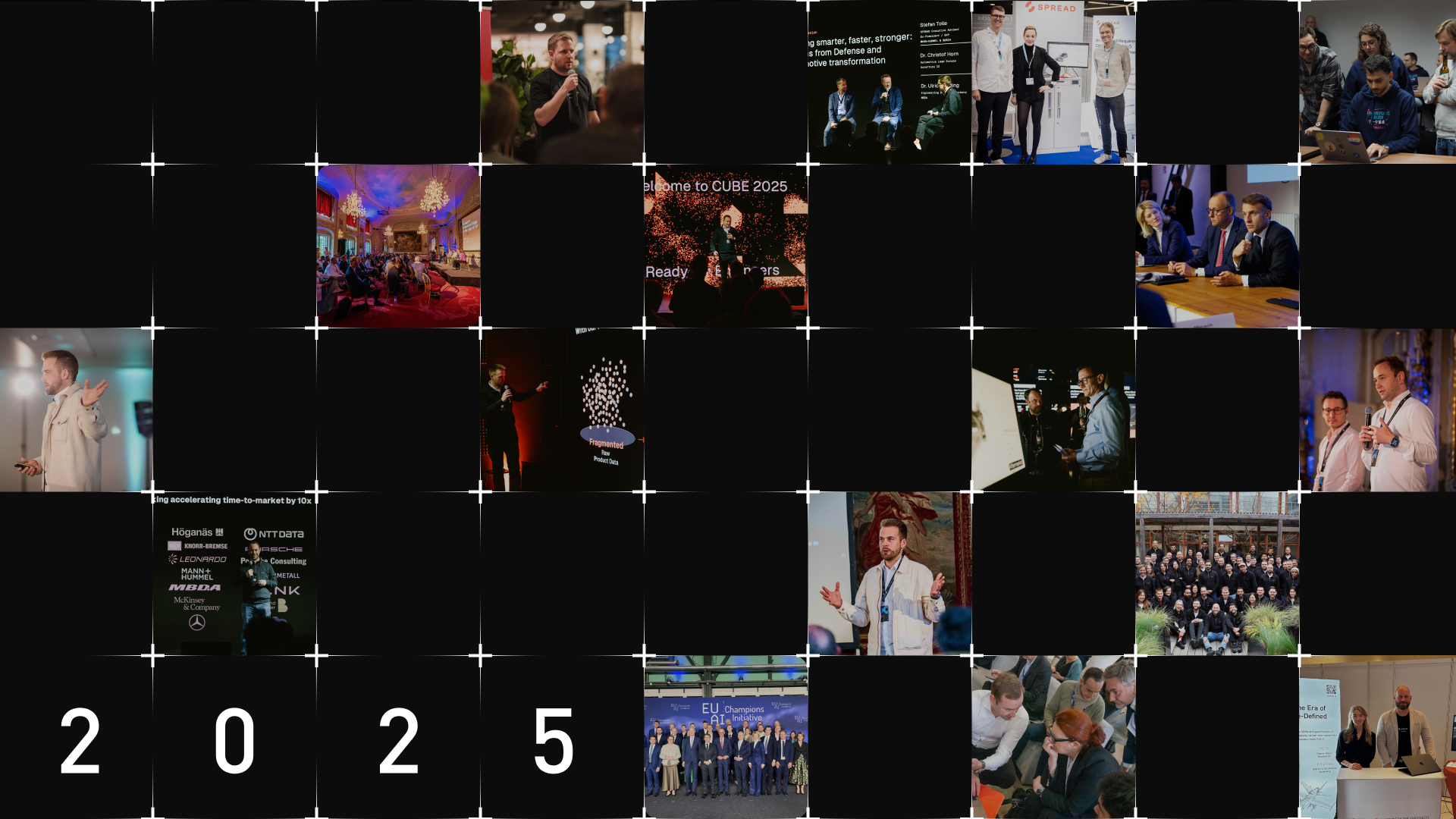
This year marked a clear shift, not just in technology, but in how Europe chooses to move forward in the race to AI Sovereignty. Across industries, sectors, and borders, leaders aligned around a shared understanding: Europe’s industrial future will be decided by how well it builds, how fast it learns, and how effectively it turns intelligence into action, together, not in isolation. What followed was momentum: collaboration replacing fragmentation, execution following intent, and ecosystems forming around what actually works.
Below are the milestones that shaped this year. Below are the moments that defined that progress. Thank you for being part of the community, helping turn this momentum into lasting capability.
European Digital Sovereignty Summit: Speed as Europe’s Strategic Advantage
Earlier this year, SPREAD joined the EU AI Champions Initiative, a coalition of more than 60 European companies committed to accelerating applied AI in industry and strengthening Europe’s industrial base
That shared ambition took shape at the European Digital Sovereignty Summit, where leaders from industry, policy, and technology came together to address a critical question: How does Europe turn AI ambition into operational capability?
At the summit, 18 new industry–AI partnerships were announced, marking a clear shift from alignment to execution. Representing SPREAD, Philipp Noll participated in discussions attended by Friedrich Merz and Emmanuel Macron, alongside leaders from companies including SAP, Mercedes-Benz, Airbus, and Deutsche Telekom. In that context, SPREAD announced its partnership with MBDA and Rheinmetall, a concrete step toward strengthening Europe’s defense capabilities through applied Engineering Intelligence.
The message was clear:
Europe’s digital sovereignty will depend on its ability to connect data, accelerate engineering cycles, and operationalize AI at scale.

INAI 2025: Europe Aligns on the Foundations for Industrial AI
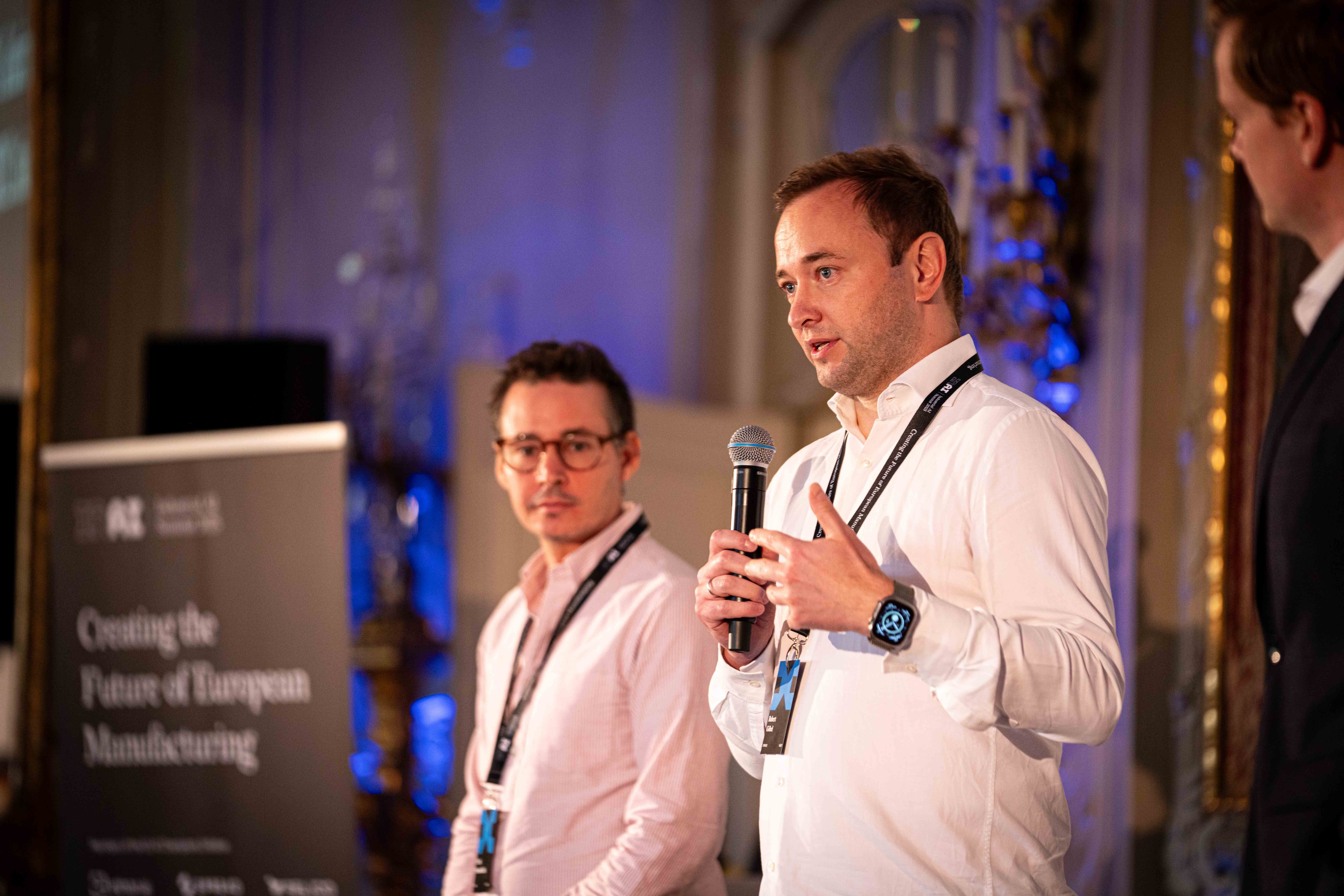
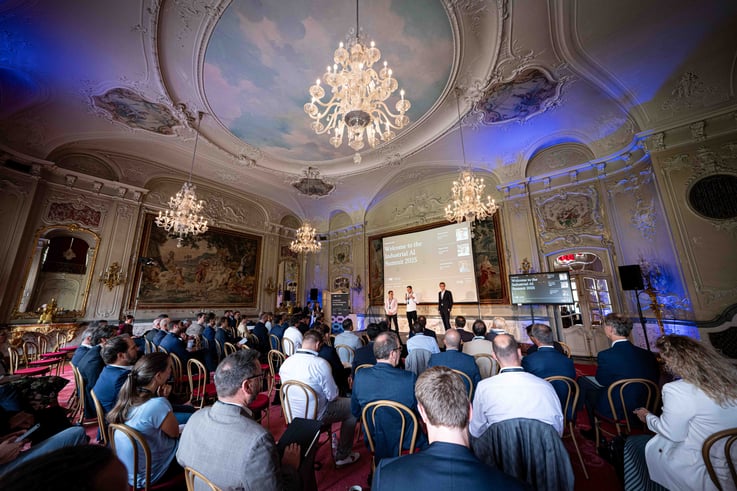
The inaugural Industrial AI Summit, held at Schloss Donaueschingen and co-hosted by SPREAD, EthonAI, and Pelico as part of the EU AI Champions Initiative, brought together selected executives and leaders from The Economist, Siemens, IDC, General Catalyst, the European Parliament, and more to explore the transformative potential of AI for the manufacturing industry.
''AI Is Not Holding Us Back, We Are, Data needs context to drive operational value.''
At the event, leaders aligned on a clear set of learnings:
-
Industrial AI creates value horizontally, across R&D, production, and supply chains — not in isolated vertical pilots.
-
Partnerships scale faster than internal builds, with external collaboration proving twice as effective in driving adoption.
-
Industrial AI is not a transitional SaaS play — people are at the center, requiring commitment from shop floor to top floor.
-
Europe has the data, know-how, and talent — what’s needed now is greater openness to partner, boldness to act, and capital to scale.
The takeaway is that Europe’s progress will depend on coordinated action, aligning data foundations, accelerating adoption, and working across industries to turn existing potential into real, operational impact.
CUBE 2025: AI-Ready FOR Engineers
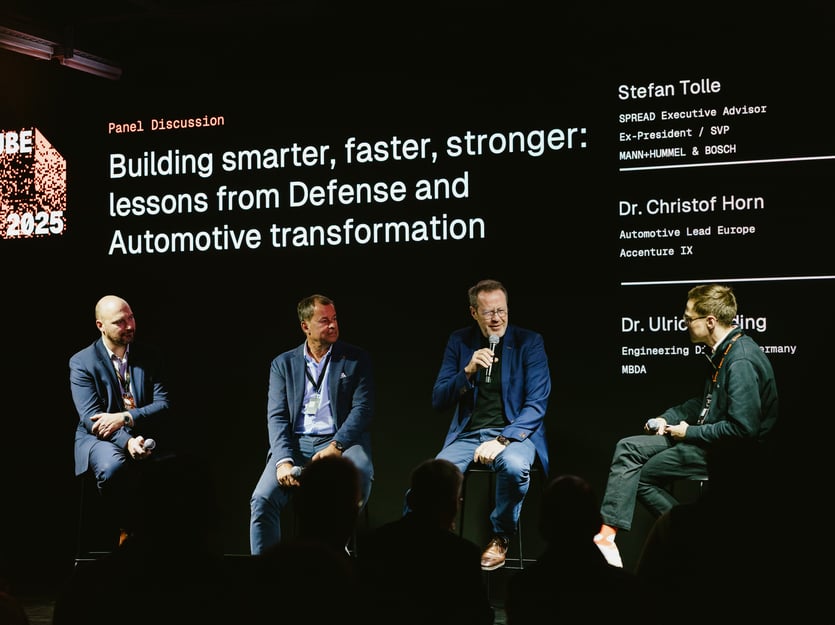
In its fourth edition, CUBE, SPREAD’s annual flagship event, brought together leaders from automotive, defense, rail, aerospace, machinery, and suppliers, including representatives from Volkswagen, BMW, Alstom, MBDA, Audi, Siemens, and more.
The conversations centered on one theme: What does it mean for engineering organizations to be truly AI-Ready?
Leaders from Volkswagen, BMW, and MBDA shared how they use SPREAD to tackle their most complex engineering challenges while developing software-defined products. Despite operating in vastly different sectors, leaders shared a common reality: Engineering complexity is growing faster than existing processes and tools can handle. To scale development in a software-defined world, teams require contextual, trustworthy data as the backbone for every AI workflow.
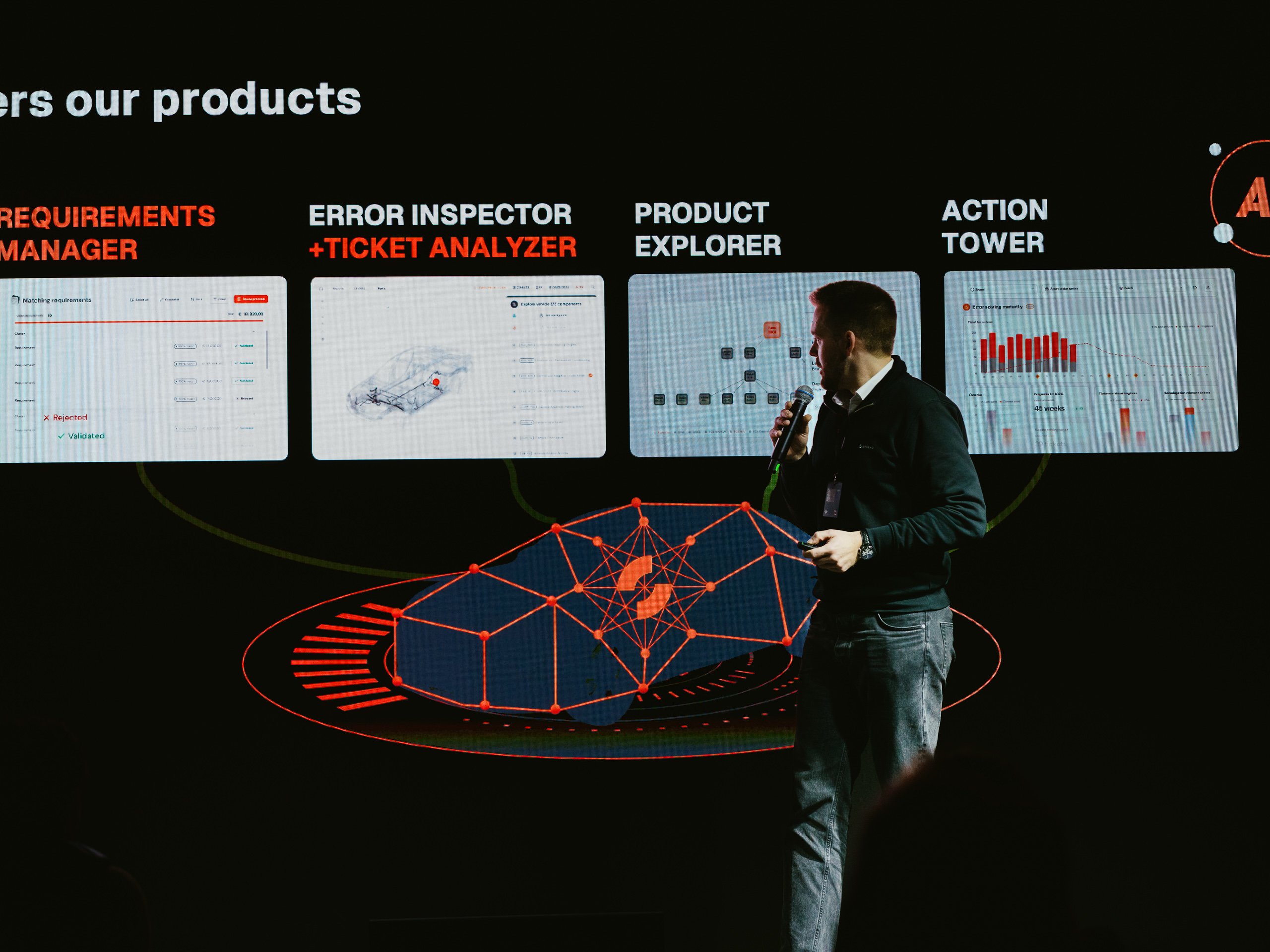
At CUBE, Philipp Noll showcased how our Engineering Intelligence Platform now contextualizes the full product lifecycle, from requirements and architectures to signals, variants, production issues, and field data, into one living source of engineering truth.
Across Data Ingestion → Product Twins → Action Cloud, this intelligence layer is already helping leading OEMs and defense primes:
- Identify E/E and software issues up to 75% faster
- Reduce variant complexity and development costs
- Steer maturity with real-time system transparency
Philipp summarized it simply: Engineering complexity has outgrown human intuition, but with the right AI, it becomes a competitive advantage.
Founders’ Note: Scaling What We Started
Europe is entering a decisive moment. The question is no longer whether AI will reshape industrial engineering, but who moves early enough to turn it into a lasting advantage.
Across industries this year, we saw alignment: leaders agreeing that competitiveness will be won by those who bet on the right foundations now, AI that engineers can trust, systems that make complexity manageable, and ecosystems that move faster together than alone.
As we head into 2026, we’re scaling what works, scaling the systems, the intelligence, and the trusted collaborations that turn engineering data into real capability.
What gives us confidence is the ecosystem forming around this shift. Progress depends on trust between scaleups, industrial leaders, and partners who are willing to build together. That trust is what allows innovation to move from promise to impact, and it’s what enables companies of all sizes to contribute meaningfully to Europe’s industrial future.
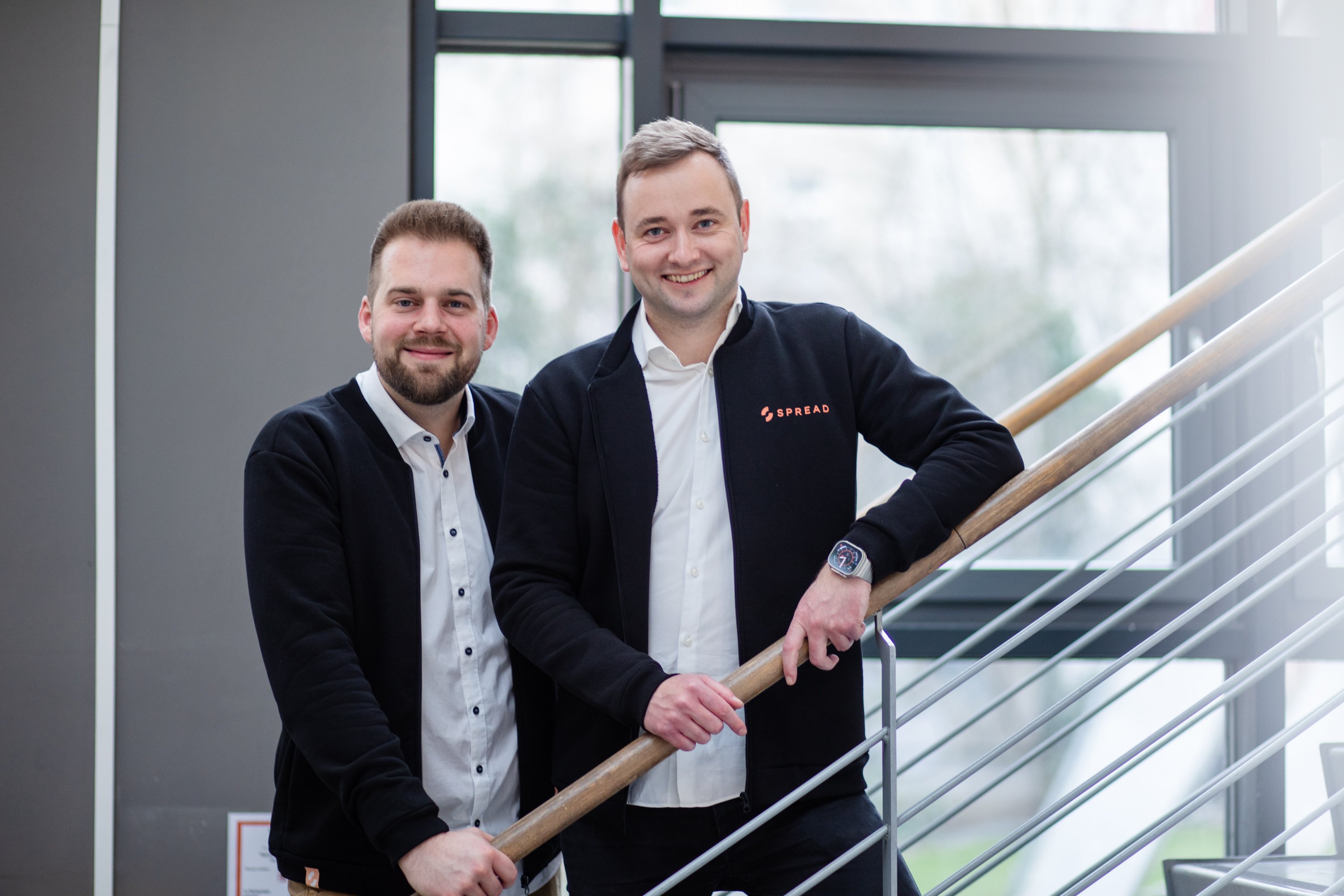
— Philipp Noll & Robert Göbel
Let’s make 2026 the year we make this happen together!
WHITEPAPERScaling Industrial AI from Pilots to ValueA practical target architecture for taking AI beyond isolated pilots, from the team behind the engineering intelligence layer.Get the whitepaper